Do You Know The Ramifications Of Your Vote On The November Ballot?
A Voter's Guide to Single-Member Districts in Lee County
Summary:
Lee County, Florida voters will decide in November 2026 whether county commissioners should continue to be elected countywide or switch to single‑member districts starting in 2028. Today, every voter helps elect all five commissioners; under the proposed change, each voter would elect only the commissioner for their own district.
Supporters of single‑member districts (“YES”) say it strengthens neighborhood representation, lowers campaign costs, reduces big‑money influence, improves accountability, and aligns Lee County with most large Florida counties.
Opponents (“NO”) argue it reduces voter influence (from voting for five commissioners to one), weakens countywide accountability for taxes and major infrastructure, encourages “ward politics,” and was placed on the ballot by state legislators rather than local charter processes.
For Greater Estero (District 3), the shift would mean relying on one commissioner to advocate for county taxes, road funding, growth management, and environmental protection, rather than having all five commissioners seeking South Lee votes.
Ultimately, the referendum asks voters to choose between local control through district representation or preserving broad voting power and countywide accountability. As always, confirm details with trusted local sources.
Published October 22, 2026 by Engage Estero
Written by
Terry Flanagan
Vice President of Administration
What Is This Ballot Measure About?
On November 3, 2026, Lee County voters will make a significant decision about how our county leaders are elected. On your ballot, you will see a referendum question asking whether Lee County should switch to "single-member districts" for the Board of County Commissioners beginning in 2028. Today, county commissioners are elected countywide. This means that even though a commissioner must live in a certain area, every registered voter in the entire county can vote for all five commission seats. If voters approve this charter amendment (enacted by the Florida Legislature as Chapter 2025-222, sponsored by State Representative Mike Giallombardo and signed by Governor Ron DeSantis), that system will change. Starting in 2028, you would vote only for the one commissioner who represents your local neighborhood district.
Exact Ballot Question:
"Shall Chapter 2025-222, Laws of Florida, which amends the Lee County Home Rule Charter to provide that, beginning with the 2028 general election, the Board of County Commissioners shall be composed of five (5) members elected in single-member districts, become effective?"
To become law, the referendum requires a simple majority (more than 50%) of the countywide vote. If passed, commissioners elected in 2026 under the old rules will serve their full four-year terms through 2030, allowing a smooth transition to the new single-member districts.
Where Do You Live, and Who Represents You?
Many voters find district numbers confusing. Here is a clear breakdown of the five county commission districts, the communities they cover, and their current representatives:
| District & Coverage | Primary Communities | Current / Incoming Official |
| District 1 (Coastal & Islands) | Sanibel, Captiva, Pine Island, Matlacha, Boca Grande, and parts of coastal Cape Coral. | Kevin Ruane |
| District 2 (Central Lee) | South Fort Myers, Gateway, Page Park, Fort Myers Villas, Whiskey Creek, Cypress Lake. | Cecil Pendergrass |
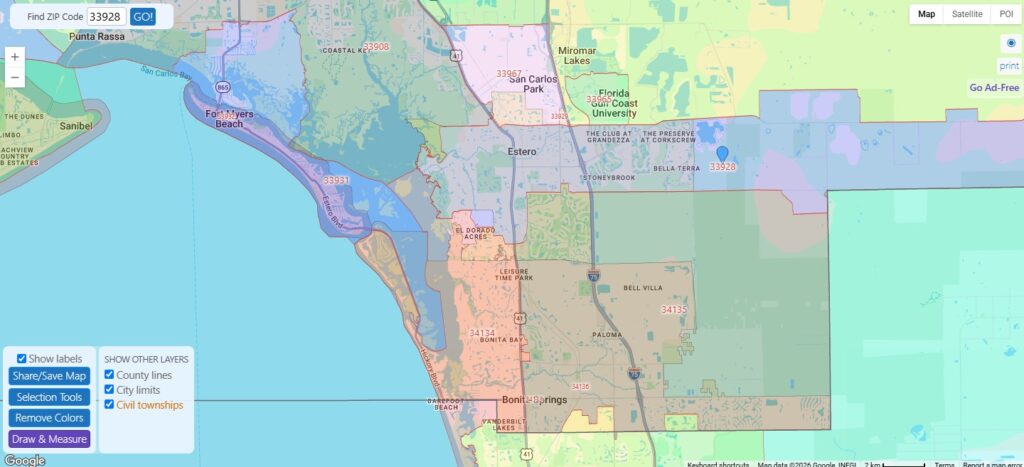
| District 3 (South Lee / Estero) | Village of Estero, Bonita Springs, Fort Myers Beach, San Carlos Park, Estero Island. | David Mulicka (Sole seat; Estero votes on under proposed system) |
| District 4 (North Lee & Urban) | North Fort Myers, downtown Fort Myers, and northern Cape Coral. | Brian Hamman |
| District 5 (East Lee County) | Lehigh Acres, Alva, Buckingham, Tice, Olga, and rural east Lee County. | Amanda Cochran (Won Aug. 2026 primary with 54.76% of candidate votes; takes office Nov. 2026) |
How the Two Voting Systems Compare
| Key Feature | Current System (At-Large) | Proposed System (Single-Member) |
| Your Vote | You vote for all five commissioners across the entire county over 4 years. | You vote for only one commissioner who represents your home district. |
| Candidate Residency | Candidates must live inside their district. | Candidates must live inside their district. |
| Voter Base | Over 500,000 registered voters across nearly 900,000 residents countywide. | About 100,000 registered voters per district (~180,000 residents). |
| Campaign Costs | Very high. Requires costly regional TV/radio ads and massive countywide mailers. | Much lower. Allows grassroots door-to-door campaigning and neighborhood talks. |
| Accountability | Commissioners must appeal to a countywide majority to win or stay in office. | Commissioners answer directly to the voters of their immediate home district. |
| Prevalence in Florida | Lee County is an outlier: the largest county in Florida electing everyone at-large. | Standard model used in most large, fast-growing Florida charter counties. |
The Arguments in Favor: Why Vote "YES"?
Neighborhoods Pick Their Own Representative:
Under the current at-large system, outside voters can outvote residents within a district. County election records show that in at least 14 of 23 past county commission races, the candidate with the most votes in their home district lost because voters in other areas voted differently.
Lower Campaign Costs and Less Big-Money Influence: Running a countywide campaign among 500,000+ voters costs hundreds of thousands of dollars. Supporters argue this gives massive power to well-funded political action committees (PACs) and large commercial developers.
Direct Neighborhood Accountability: When a commissioner answers only to their local district, their political future depends on solving neighborhood problems—such as traffic congestion, school crosswalk safety, drainage, and zoning disputes.
Fairer Diversity and Civil Rights Protections: Federal courts applying the Voting Rights Act of 1965 have long criticized at-large elections for diluting minority communities' voting strength.
Voters Deserve Local Control: When given the chance, Lee County voters have repeatedly favored more local control, such as adopting district seats for the School Board. But supporters argue that voters should have the final say in choosing their county commission.
The Arguments Against: Why Vote "NO"?
Losing 80% of Your Voting Power ("Trading Five Votes for One"): Opponents argue that this measure diminishes your democratic voice. Under the current system, you vote for all five commissioners who govern Lee County.
No Accountability for the Leaders Who Set Your Taxes: The Board of County Commissioners makes major decisions that affect every resident: setting the county property tax rate (millage), managing the multi-billion-dollar county budget, and funding the Capital Improvement Program for regional roads and bridges.
Risk of "Ward Politics" and Vote-Trading: Critics warn that district voting makes commissioners care only about their own small district rather than the whole county.
State Politicians Meddling in Local County Rules: Opponents strongly object to state lawmakers placing a charter amendment on the ballot via a special legislative bill, bypassing Lee County's local Charter Review Commission and the citizen petition process.
School Board Lessons: Opponents point to the Lee County School Board, which in 2014 shifted to a mix of district- and countywide seats. Critics contend this change brought more arguing and political division to board meetings.
What Does This Mean for the Greater Estero Area (District 3)?
For residents in the Village of Estero, Bonita Springs, and San Carlos Park, this referendum has very specific local impacts:
Your Property Taxes: While the Village of Estero charges a low town property tax (0.7726 mills), county government taxes make up roughly 36% of the property tax bill for a typical Estero home. Under single-member districts, you would hold only your District 3 representative accountable for county tax rates; the other four commissioners who vote on that budget would not represent any South Lee voters.
Road and Gas Tax Funding: Estero receives a set 2.52% statutory share of Lee County's local gas taxes for road work. Major regional projects—such as widening Corkscrew Road, extending Three Oaks Parkway, and improving US 41—rely on funding approved by the full county commission. Voters must weigh whether one dedicated district advocate or five commissioners, each needing South Lee votes, would better champion South Lee roads.
Managing Growth and Protecting Estero Bay: Estero has always prioritized controlling density and protecting our environment, especially the Estero Bay Aquatic Preserve and the Corkscrew watershed. Under single-member districts, a District 3 commissioner would be directly accountable to residents who oppose reckless development. However, changes to the county growth plan still require a majority board vote, so the other four commissioners could still outvote your local commissioner.
Reaching Out for Help: Today, if an Estero resident or community group has trouble getting help from their local commissioner, they can reach out to any of the other four commissioners because all five run countywide. Under single-member districts, you would have one dedicated go-to commissioner, but you would lose the ability to turn to other commissioners if your representative is unresponsive.
Active Civic Participation: South Lee voters care deeply about local quality of life. In the August 18, 2026, primary election, voters strongly approved the Bonita Estero Rail Trail (BERT) bond referendum, with 66.52% voting YES, demonstrating strong engagement when community investments are on the ballot.
Form Your Own Opinion: The Decision Is Yours
This referendum isn't about party politics; it is about how you want your local community governed. Both systems have clear advantages and trade-offs:
A "YES" Vote favors local neighborhood control, lower campaign costs, and guarantees that outside voters cannot overrule the representative your home district wants.
A "NO" Vote favors preserving your full voting power, holds all five commissioners accountable for countywide taxes and roads, and encourages leaders to focus on the big picture.
The right choice depends on what you value most in local leadership. Engage Estero encourages every citizen to: (1) review the facts and weigh both sides, (2) consider how each system affects taxes, roads, and growth in South Lee, (3) attend nonpartisan community forums and ask questions, and (4) cast your vote on November 3, 2026.
Amendment 3 on the Ballot
In an earlier article, Engage Estero answered a range of residents' questions about voting for or against Amendment 3, which asks whether to continue or stop the property tax. See https://esterotoday.com/estero-florida-amendment-3-property-tax-vote-explained/
Engage Estero is a 501 (c) (3) nonprofit, nonpartisan, public benefit organization that provides trusted, research‑based data, presents balanced community information, encourages informed civic participation, and advocates when necessary to preserve and enhance the quality of life, resilience, and sustainability of Greater Estero.
As a nonprofit organization, Engage Estero takes no advocacy position on political candidates or ballot referenda. Our commitment is solely to equip residents with objective research and balanced perspectives so that every citizen can make an informed decision.
Related Articles
Good Things Happening in Estero: Key Updates on Local Parks, Taxes, Traffic Safety & Recreation
October 22, 2026
Understanding Florida Amendment 3: What Greater Estero Voters Need to Know About the Property Tax Proposal
September 30, 2026
| Governance, Voting


At Engage Estero, we believe in the power of community. As a nonpartisan, nonpolitical, nonprofit, we conduct evidence-based research to provide unbiased information about local issues, helping you improve your quality of life.