What Is Being Done and What More Should Be Considered to Secure Our Future?
Introduction
Compared to the 1980s, there are now twice as many days with temperatures over 50 °C and in more locations around the globe.1 And accompanying this rise in temperatures has been a fivefold increase in weather-related disasters over the past 50 years.2
This pattern has continued to grow over the past four years, since the articles addressing the above facts were written. In the U.S. and Canada, numerous weather-related disasters have already occurred in the first half of 2025, including wildfires, flash floods, and storms that have produced deadly tornadoes.

Allan Bowditch
President
It is their frequency and increased intensity that are raising growing concern among government officials and the public. While debates about the causes of global warming continue, its effects demand action to address well-supported predictions of warmer ocean temperatures, rising sea levels, more intense storms, and impacts on farming and other vegetation. "The number of weather, climate, and water extremes is increasing and will become more frequent and severe in many parts of the world as a result of climate change," said World Meteorological Organization Secretary-General Prof Petteri Taalas. "That means more heatwaves, droughts, and forest fires such as those we have recently seen in Europe and North America. We have more water vapor in the atmosphere, which worsens extreme rainfall and deadly floods. The warming oceans have influenced the frequency and reach of the most intense tropical storms," he added.
The definition of resilience is as follows: Resilience, in the context of global warming, refers to the capacity of systems—natural, human, and built—to prepare for, respond to, recover from, and adapt to the impacts of climate change. It’s about withstanding extreme weather events and long-term effects from sea-level rise, heatwaves, or droughts.
The Risks to Estero and What is Being Done
Given Estero’s location near the Gulf of America, it is crucial for the safety of our community that resiliency remains a top priority in plans. Engage Estero is pleased to report that this issue has received attention, and the Estero Village Management and Council have already implemented several resiliency measures.
In a critical article written on the issue of resiliency in Southwest Florida by David Dorsey in Gulfshore Business in June 20253, the following summary was provided about Estero’s actions and plans.
The Village of Estero started some advanced work in a low-lying area. Last year, the village paid the Lee County School District $15 million for a 72-acre property located between Interstate 75 and Three Oaks Parkway. It’s surrounded by housing developments that flooded during Hurricane Irma.
Estero is constructing a 25-acre pond for flood mitigation, with $5 million allocated by the federal government and an additional $1.7 million from the Village. The land had been slated to become 400 to 600 housing units. Instead, it will be used to store and transport excess rain runoff along the Estero River, away from existing homes.
“It is mundane to the community at large,” Estero Village Manager Steve Sarkozy says. “But to those neighbors who experienced the flooding … when you’re looking at a high-density, high-traffic development option versus mitigating flooding in a tight area, it’s a baby step in helping the overall livability of our community.”
Estero is also doing a vulnerability study focusing on the older part of town, near Broadway Avenue, where aging septic tanks outnumber the sewers of the newer, gated communities. “That’s going to identify where the environmental vulnerabilities are,” says David Willems, Estero’s public works director. “That’s going to look at rainfall flooding, storm surge flooding, wildfires, and sea level rise. That’s going to identify where the village is vulnerable.”
Residents in Estero need to be aware of Estero Village’s work and focus in this area. Estero must remain proactive in mitigating future weather events to minimize the impact on residents.
It should be evident that Climate Resilience Matters: It is necessary to
- Protect lives and livelihoods from worsening climate impacts.
- Reduces economic losses from disasters.
- Preserves ecosystems that provide critical services like clean water, food, and carbon storage.
- Promotes social equity by ensuring vulnerable populations are not left behind.
Future Actions Needed
There are aspects that the Village alone may not be in a position to undertake due to the size and scope of the issues being considered. Municipalities in Florida face some of the most acute risks from global warming in the U.S., including sea-level rise, stronger hurricanes, saltwater intrusion, flooding, and heat extremes. Over the next 30 years, their development must be guided by principles of climate resilience to protect communities, economies, and ecosystems.
 Collaboration will be necessary among State, County, and Local Council officials, as well as alignment with state and federal funding sources (e.g., FEMA, HUD, NOAA grants). There should also be consideration for partnering with universities, businesses, and National Government Organizations to co-develop innovative solutions. Some of the issues that will require addressing include:
- Implementing plans and infrastructure to reduce vulnerability by building seawalls in vulnerable places.
- Redesigning urban areas to handle higher temperatures.
- Restricting new development in high-risk coastal and flood-prone areas.
- Elevate infrastructure (roads, bridges, utilities) and homes in vulnerable zones.
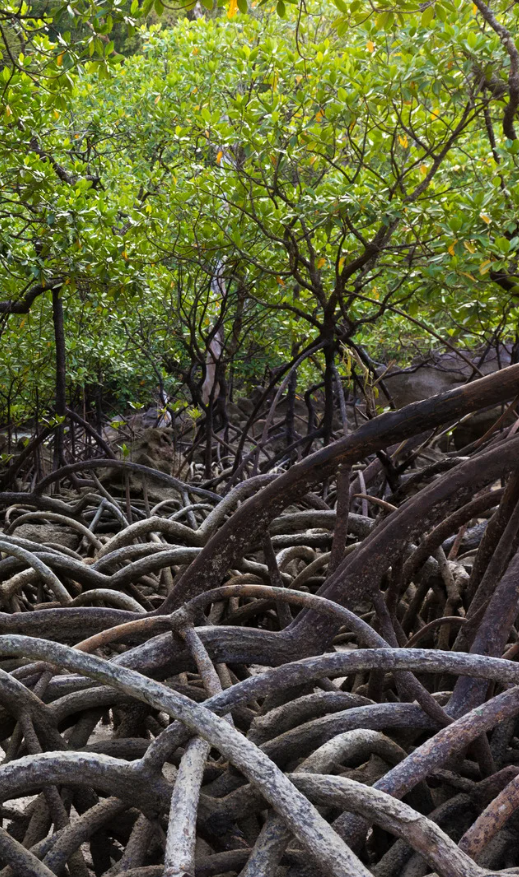
- Invest in living shorelines (mangroves, oyster reefs) that buffer storm surge and erosion.
- Encourage compact, walkable development on higher ground (e.g., “resilient density”).
- Update building codes for wind resistance, heat adaptation, and flood mitigation.
- Expand green infrastructure: permeable pavements, rain gardens, urban forests.
- Retrofit vulnerable housing, especially in low-income areas, to withstand disasters.
- Upgrade stormwater systems to handle more intense rainfall.
- Protect and restore wetlands and aquifers, which naturally absorb and filter water.
- Address saltwater intrusion threatening drinking water by relocating wells or injecting freshwater barriers.
Despite the risks to everyone who wishes to continue to live in greater Estero, we have many benefits that contribute to our high Quality of Life. But it may be necessary for everyone to be prepared for the possible implementation of climate impact fees or resilience bonds to fund adaptive infrastructure.
In short, Florida cities must shift from reactive disaster recovery to proactive climate planning, incorporating resilience into all aspects of development. That involves building smart, green, and safe communities on stable ground, while investing in both nature-based and technological solutions to address climate threats.
Estero is on the right track, but there is still much to do!
References:
- Climate change: World now sees twice as many days over 50C, Becky Dale & Nassos Stylianou Sept 2021. https://www.bbc.com/news/science-environment-58494641
- Climate change: Big increase in weather disasters over the past five decades, Matt McGrath, Sept 2021. https://www.bbc.com/news/science-environment-58396975
- SWFL boosts storm resilience with infrastructure, flood defenses, Gulfshore Business, David Dorsey, June 2025. https://www.gulfshorebusiness.com/southwest-florida-boosts-storm-resilience-with-infrastructure-flood-defenses/
Be Informed,
Get Engaged,
and Make an Impact!
At Engage Estero, we believe in the strength of the community. As a nonpartisan, nonpolitical nonprofit, we utilize evidence-based research to provide nonbiased information about community issues, empowering you to improve your quality of life.