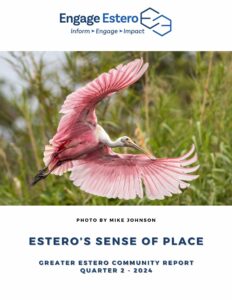

Most people in Estero live just a few miles from one of Southwest Florida’s most remarkable natural treasures — the Estero Bay Estuary. Yet for most, it remains unseen and unexperienced. It sits quietly beyond the river, behind private shorelines, limited launch points, and the long, congested drive around the system that most residents simply don’t make.
The river has functioned more as a boundary than a bridge. We catch glimpses of it from bridges or park edges. We know it’s there. But the full, living estuary — the winding waterways through mangroves, the sudden openings into Estero Bay, the dolphins, manatees, roseate spoonbills, and the quiet rhythm of tidal life — stays out of reach for everyday Estero residents.
What if we changed that single perspective?
What if we stopped seeing the Estero River only as a scenic edge for parks and started seeing it as Estero’s front door to the estuary — a true public gateway that invites residents in rather than keeping the water world at arm’s length?
This is not a small shift in language. It is a profound shift in what is possible.
A New Daily Rhythm for Estero
When the river becomes a gateway rather than a boundary, ordinary days gain an extraordinary dimension.
For families east of US-41 and I-75 — the thousands of households in Grandezza, Copperleaf, Shadow Wood, and dozens of other neighborhoods — a Saturday morning no longer means loading the car, fighting traffic on US-41 or I-75, and driving 30–45 minutes just to reach the water. Instead, a short bike ride or golf-cart trip along a future trail connection brings them to a thoughtfully designed launch. Within minutes, they are paddling into a world most of their neighbors have never truly seen. Children who have only known Estero as roads and shopping centers suddenly experience the magic of gliding past mangrove tunnels and spotting wildlife. That single change ripples outward: more time together, less stress, and a deeper connection to the place they call home.
For seniors and those aging in place, the transformation is even more personal. Gentle, low-impact access to calm water becomes a form of medicine. Short paddles or even shoreline time with interpretive views of the estuary support physical movement, mental well-being, and social connection. The same river corridor that once felt distant now offers daily or weekly renewal without the barrier of long drives or complicated planning. This is what “aging in place” looks like when a community truly embraces its greatest natural asset.
For young professionals and families already living closer to the river or the future Village Center, the gateway creates new rhythms, too. After work, a quick paddle replaces another hour in traffic. Weekend gatherings move from backyards to the water’s edge. The river stops being something you drive past and becomes something you use — part of the texture of daily life rather than a postcard view.
For the entire community, the benefits compound. Every resident who chooses the river gateway instead of adding another car to US-41 during peak hours contributes to real congestion relief. The same infrastructure that opens the estuary also creates safer walking and biking routes, more vibrant public spaces, and new reasons for people to linger in Estero rather than drive elsewhere for recreation.
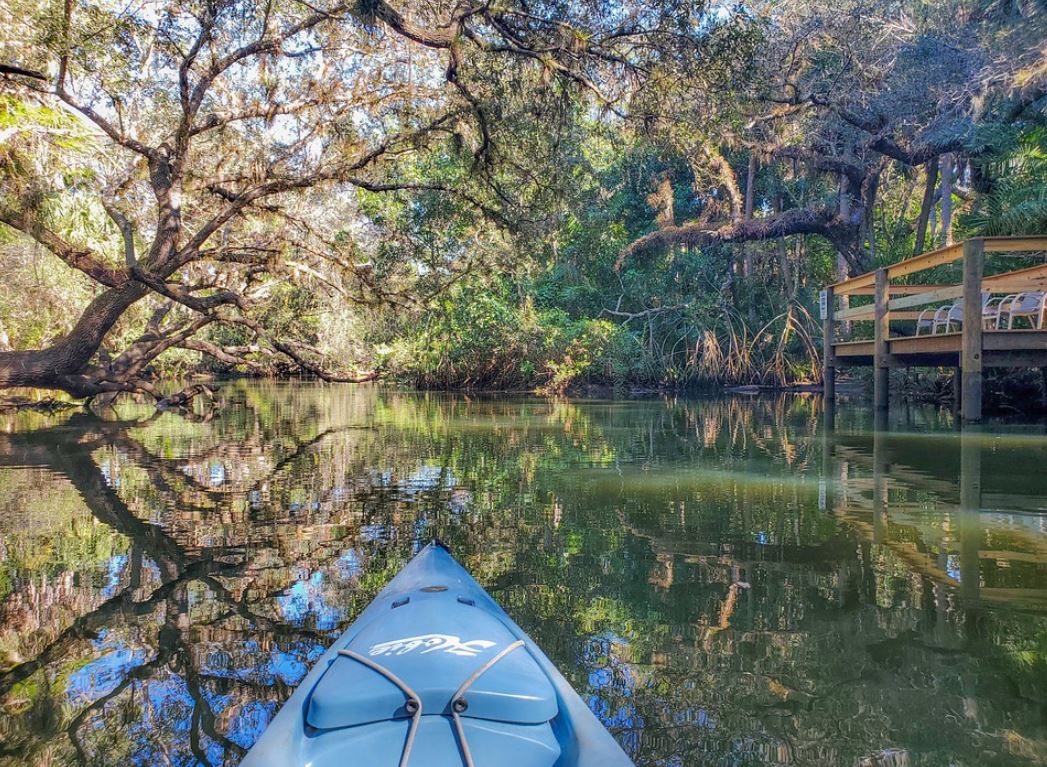
A Win for Every Resident — Not Just Those Nearest the Water
This is the crucial point: improved river access as a gateway to Estero Bay is not a win only for people who live closest to the river. It is a win for the whole village.
Congestion Relief
Traffic touches everyone who drives US-41 or I-75. Fewer recreational car trips mean less pressure on the roads we all share.
Economic vitality
Outfitters, kayak rentals, guided eco-tours, riverside cafés, and supporting businesses thrive when more people can reach the water. That activity supports jobs and tax base that benefit every neighborhood.
Community identity
Estero stops being perceived as purely landlocked or car dependent. We become known as the community with the beautiful, accessible river-to-bay experience — a place where nature and daily life are genuinely connected.
Environmental stewardship
When thousands more residents develop a personal relationship with the estuary through managed, low-impact access, support grows naturally for protecting water quality, mangroves, and habitat. People protect what they know and love.
Resilience
Resilience in the fullest sense — environmental, social, and economic — becomes real rather than theoretical. The three pillars of the Eco-Historic Planning Study are not just balanced; they reinforce one another when the river functions as a living connector.
What This Actually Looks Like
This vision does not require abandoning the excellent work already in the Eco-Historic Planning Study. It elevates it.
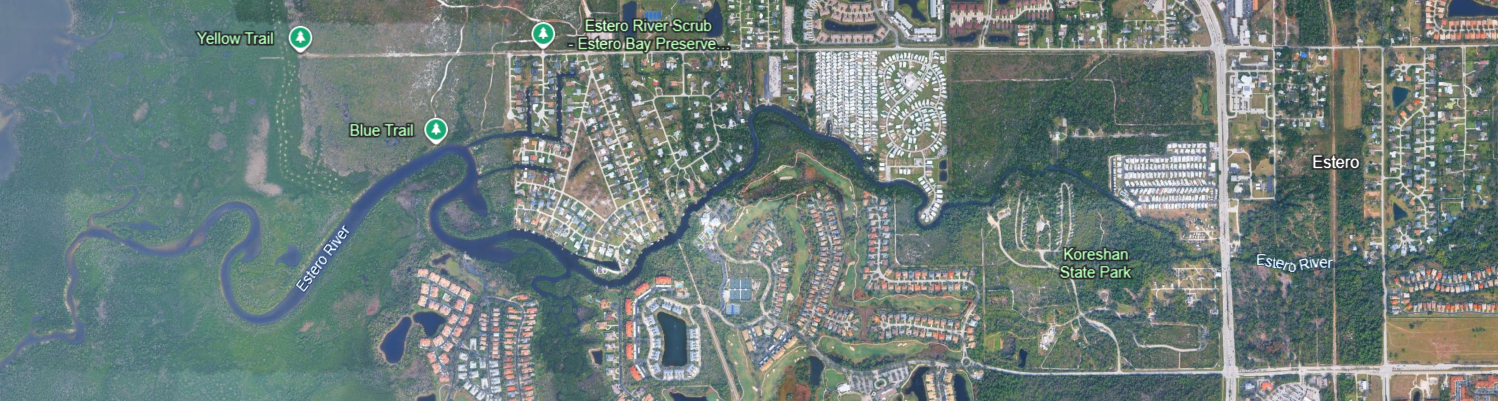
The four catalyst projects already identified — the Village Center, the Bonita-Estero Rail Trail (BERT), Estero RiverPark, and US-41 corridor improvements — become even more powerful when designed with the river-as-gateway in mind. The Village Center gains a waterfront promenade and outfitter hub. BERT gains water-trail connections. Estero RiverPark becomes the primary public launch and education node rather than merely a land-side destination. US-41 improvements include safe crossings and clear wayfinding that say: “This way to the Estero River Gateway and Estero Bay.”
A handful of well-designed, low-impact public access points along land the Village already controls or will soon control make the estuary reachable without compromising its health. This is managed access done responsibly — the same philosophy that makes great waterfront cities work, scaled to Estero’s character and values.
We already have a local example of what convenient river access can mean inside Estero. Pelican Sound has shown how direct water connections transform daily life for its residents. We have the chance to create a public version of that convenience — open to every Estero resident and visitor who wants it.
The Unseen Becomes Seen.
The Unexperienced Becomes Part of Us.
When the Estero River shifts from a boundary to a gateway, something fundamental changes how Estero feels as a place.
The estuary stops being a distant blue shape on a map or a view from a car window. It becomes part of the lived experience of Estero — something families, seniors, newcomers, and longtime residents can reach, enjoy, and make memories around. The “unseen and unexperienced” becomes seen, paddled, photographed, shared, and protected.
This is how communities develop a deeper sense of place. Not through another shopping center or road widening, but through meaningful access to the natural systems that have always defined this landscape.
Estero has always had this extraordinary asset at its heart. The Eco-Historic Planning Study gives us the framework. The Village now holds key riverfront land. The community survey already told us people want this connection.
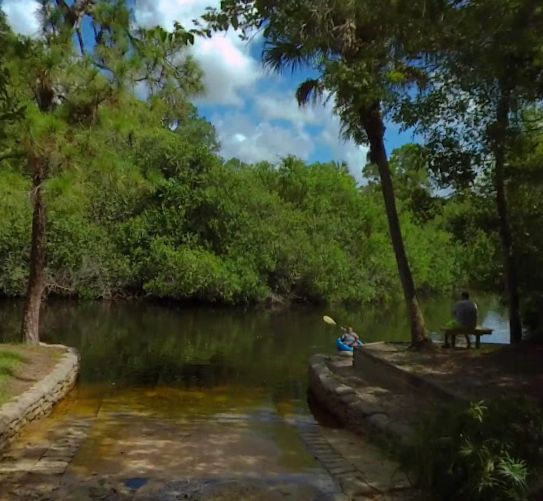
Image Credit: Google Earth
How You Can Help Turn This Vision Into Reality
Your voice matters right now.
The Eco-Historic Planning Study is still moving toward final adoption. The Village Council can strengthen the plan by adding a clear Estero River Conduit & Estuary Gateway element — ensuring the river serves as a true public gateway to Estero Bay for every resident, especially those east of US-41 and I-75.Here’s what you can do today:
- Contact the Village Council and let them know you support making the Estero River a gateway to the estuary. A short email or phone call carries real weight while the plan is still being finalized.
- Attend the next Village Council meeting and speak during public comment. Share why convenient, responsible river-to-bay access would improve your life or your family’s life in Estero.
- Talk to your neighbors and HOA. Many residents east of US-41 and I-75 don’t yet realize how close a solution could be. Share this vision and encourage others to add their voices.
- Reach out to Engage Estero. We are actively supporting this idea and can help connect residents who want to stay informed or get involved in upcoming discussions.
- Ask specifically for the plan to include a focused River Gateway addendum or cross-cutting element that integrates public access with the four catalyst projects already proposed.
The community survey already showed strong support for waterfront and riverfront experiences. Now is the moment to make sure that desire is fully reflected in the final plan.
This is not someone else’s project. It is ours. The river has always been here. The land is now in public hands. The planning process is still open.
Together, we can open the door.
When we do, the unseen estuary becomes part of daily Estero life — not just for a few, but for everyone who calls this community home.
*Google Earth Image Credit: Map data: Google, Vexcel Imaging US, Inc.
Related Articles by Engage Estero

Myth vs. Fact: Navigating Environmental Claims in Our Community
Written by guest author Brandi Freeman, FGCUConversations about growth, development, wildlife, flooding, and water quality are becoming increasingly common across Southwest Florida. Social media and community forums make it easy for information — and misinformation —...
Signal Timing vs Road Widening at East Corkscrew Road
Signal Timing vs Road Widening at East Corkscrew Road Introduction In recent years, East Corkscrew Road has become a major commuter conduit due to housing development, easy access to Interstate 75, and a lack of alternative east-west roads. The once quiet, local...
Written by

Terry Flanagan
Vice President of Administration
Be Informed,
Get Engaged,
and Make an Impact!

At Engage Estero, we believe in the power of community. As a nonpartisan, nonpolitical, nonprofit, we conduct evidence-based research to provide unbiased information about local issues, helping you improve your quality of life.