

Southwest Proton
A News Update for June 2026
Written by Allan Bowditch, President, Engage Estero and Dr Shannon MacDonald, Medical Director at Southwest Florida Proton.
Introduction
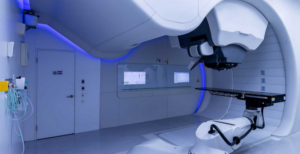
Although it has been only 6 months since the Proton Center on Estero Parkway began accepting patients, the extensive procedures required for the cyclotron setup are complete. The cyclotron, which in many modern single-room systems is a compact superconducting unit such as the IBA ProteusONE, weighs approximately 50–60 tons. The rotating treatment gantry is several stories tall and weighs approximately 90–110 tons. The cost of a proton therapy installation varies considerably depending on facility design and construction requirements. A single-room proton therapy system typically costs approximately $25–50 million, while the total cost of a proton therapy facility, including construction, shielding, and supporting infrastructure, may exceed $50 million. In the treatment room, patients most commonly see a portion of the proton therapy gantry, which rotates around the patient to direct the proton beam at the tumor from multiple angles.
Southwest Florida Proton is partnered with:
- Lee Health
- Advocate Radiation Oncology
- IBA Proton Therapy
Background
Proton therapy is a type of radiation treatment that uses protons (positively charged particles) instead of X-rays (photons) to destroy cancer cells. Its principal advantage is that protons deposit most of their energy at a predictable depth in tissue, known as the Bragg peak, with little to no dose delivered beyond that point. This physical property allows radiation to be concentrated within the tumor while reducing radiation exposure to surrounding healthy tissues and critical organs.
The advantages are
- Better protection of normal tissues
- Useful for tumors near critical structures, especially when a high dose is required
- Particularly important in children
The Current Situation at the Center.
During a recent visit to the center, Dr. Shannon MacDonald mentioned that they are already seeing 40 patients per day! Dr. MacDonald noted that patients could also undergo a range of diagnostic imaging procedures at the center. Not only was this convenient for patients, who did not have to travel to other locations, but it also enabled doctors to have immediate on-site access to test results. The latest state-of-the-art equipment includes:
- Diagnostic imaging, including MRI, PET, and CT.
- Conventional radiation therapy (TrueBeam LINAC),
in addition to the ProteusONE Proton cyclotron.
The current range of cancers that are already being treated at the center include:
Prostate Cancer, Sarcomas, Skull Base Tumors, Pediatric Malignancies, Breast Cancer, Head & Neck Cancers, and selected Brain Tumors and Gastrointestinal Malignancies, along with other rare tumors.
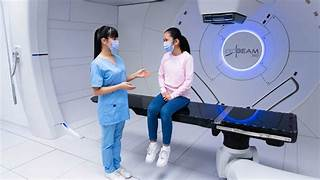
- They have their own entrance and waiting area.
- Parents and guardians have a very close proximity to their child when doctors are examining them
- They have a special “play area” that can interest them and helps reduce stress.
- Care has been taken to avoid frightening the children, disguising the equipment and seating area.
Indeed, the center's interior has been designed to provide a modern, welcoming, friendly, and professional environment for everyone.
A list of the various cancer types for which Proton Therapy has been found especially useful appears in the appendix to this article.
The Strongest Evidence.
Clinical studies have indicated that the evidence for the use of this form of treatment is strongest for:
- Pediatric cancers
- Skull-base tumors
- Certain brain tumors
- Reirradiation
- Situations where minimizing radiation to critical organs is essential
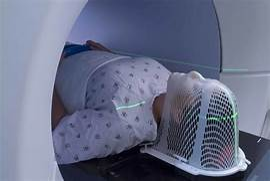 For more common adult cancers such as prostate, breast, lung, and head-and-neck cancers, proton therapy often shows dosimetric advantages (lower radiation to normal tissues), but researchers are still studying whether those advantages consistently translate into better long-term outcomes, fewer complications, or improved survival compared with modern photon therapy.
In summary, proton therapy is most valuable when:
- The tumor is close to critical organs.
- The patient is a child.
- High radiation doses are needed
- Prior radiation has already been given.
The circumstances in which proton therapy may not offer major advantages
For some cancers, modern photon-based radiation techniques already achieve excellent dose distributions. In such cases, proton therapy may provide limited additional benefit relative to its higher cost. Examples include certain:
- Early-stage prostate cancers
- Some breast cancers
- Some common solid tumors where critical organs are not nearby
In these situations, the value depends heavily on the tumor's location, size, stage, and the patient's anatomy.
In Conclusion
Proton therapy is one of the most precise forms of radiation treatment available today. Its greatest value lies in its ability to deliver high doses of radiation directly to a tumor while minimizing exposure to surrounding healthy tissues and critical organs. This makes it particularly beneficial for pediatric cancers, brain and skull-base tumors, cancers near sensitive structures, and patients requiring reirradiation.
The Southwest Florida Proton Center in Estero is a modern, single-room proton therapy facility built around the IBA ProteusONE system. In addition to proton therapy, the facility offers advanced imaging and conventional radiation therapy through partnerships with Lee Health and Advocate Radiation Oncology, enabling patients to access multiple cancer diagnostic and treatment services at one location.
Although proton therapy is more expensive than conventional radiation therapy, its ability to reduce radiation exposure to healthy tissue can yield meaningful clinical benefits for carefully selected patients. For cancers where organ preservation, long-term quality of life, and reduction of treatment-related side effects are priorities, proton therapy can be a highly valuable treatment option.
Appendix
Cancers for which proton therapy is most suitable
In brief the strongest evidence and most widely accepted uses for proton therapy are:
Pediatric cancers, such as Medulloblastoma, Ependymoma, Rhabdomyosarcoma, Ewing sarcoma, and other childhood brain and solid tumors. Here the goal is to minimize radiation to developing tissues.
Brain and central nervous system tumors, such as Low-grade gliomas, Meningiomas, and craniopharyngiomas. Chordomas and Chondrosarcomas. The proton treatment is particularly useful when tumors are close to the brainstem, optic nerves, or pituitary gland.
Skull-base tumors, such as Chordoma and Chondrosarcoma. These tumors often require high radiation doses and are located adjacent to critical neurological structures.
Sarcomas (tumors of bone and muscle) depending on their location. These tumors often require high radiation doses.
Head and neck cancers, such as Nasopharyngeal cancer, Sinonasal cancer, Salivary gland cancer, and Oropharyngeal cancer (selected cases).
Prostate cancer
This is one of the most common uses of proton therapy in adults. The potential benefits include reduced radiation to the bladder and rectum.
Lung cancer for selected patients with locally advanced disease, tumors near the heart, and prior chest radiation. In such cases, proton therapy may help reduce radiation exposure to healthy lung tissue and the heart.
Breast cancer patients, especially those with left-sided breast cancer, and those requiring irradiation of the regional lymph nodes. The potential benefits include a reduced heart dose, which may lower long-term cardiac risks.
Liver cancers such as hepatocellular carcinoma, and cholangiocarcinoma. It is useful when preserving healthy liver tissue is important.
Esophageal cancer, in this cancer type it can reduce radiation exposure to the heart and lungs. This can be particularly important during combined chemotherapy and radiation treatment.
Re-irradiation cases
One of the most valuable uses of proton therapy is treating patients who have previously received radiation. Because surrounding tissues have already accumulated radiation exposure, proton therapy may allow another course of treatment while limiting additional damage.
Related Articles by Engage Estero

Published June 16, 2026 by Engage Estero
Be Informed,
Get Engaged,
and Make an Impact!

At Engage Estero, we believe in the power of community. As a nonpartisan, nonpolitical, nonprofit, we conduct evidence-based research to provide unbiased information about local issues, helping you improve your quality of life.