


Prostate Cancer
What you need to know!
Part 1- Diagnosing
Written by Allan Bowditch, President, Engage Estero, and Dr. Paul Rodriguez, MD, Urologist
Introduction
There has been considerable interest in this topic, possibly due to the new Southwest Proton facility, which is now fully operational on Estero Parkway just outside the Village of Estero's northern boundary.
In this two-part series on the subject, the first article will address recent diagnostic advances to distinguish Benign Prostatic Hyperplasia (BPH) from Prostate Cancer. The second article will review the various treatment options. Dr. Rodriguez is a urologist in Grand Rapids, MI, with over 40 years of experience in the medical field. Dr. Rodriguez has extensive experience with cancers of the urinary tract and prostate and is a pioneer in robotic surgery. His interests span all aspects of urinary conditions, including urinary calculi and removal.
For the record: Prostate cancer accounts for about 11% to 12% of all cancer-related deaths in men. It is the second-leading cause of cancer death among American men, with lung cancer first. The American Cancer Society estimates about 36,320 prostate cancer deaths in the United States each year. This represents an incidence of about 1 in 44 men.
 The good news is that although prostate cancer can be deadly in the more advanced stages of the disease, it has a 5-year relative survival rate of over 99% when detected early.
Only 2.2% will die of prostate cancer during their lifetime. This is why early-stage detection is important, which is why this article focuses on the various diagnostic procedures!
Diagnostic Tests
- Prostate Specific Antigen Test (PSA)
The PSA test is a useful tool for assessing the risk of prostate cancer, but it is not a definitive test for diagnosing or excluding cancer. It is best viewed as a risk marker.
What it measures
PSA is a protein produced by both normal and abnormal prostate cells. A blood test measures the amount of PSA circulating in the bloodstream. Higher PSA levels can be associated with prostate cancer, but they can also result from many non-cancerous conditions. For example, an enlarged prostate can raise PSA levels, and PSA levels are also influenced by age.
Those aged 70 to 85 might often have a PSA level between 0.0 and 6.5 ng/mL. But this is merely a guide. Some men have higher PSA levels than these, and, provided they are relatively stable, this does not mean cancer cells are present. It is essential to liaise with your urologist regularly.
How Reliable Is PSA?
The PSA test has moderate sensitivity and limited specificity:
- Some men with prostate cancer have elevated PSA.
- Some men with elevated PSA do not have cancer.
- Some men with prostate cancer have normal PSA levels.
In other words, PSA alone cannot reliably distinguish cancer from benign conditions.
Causes of Elevated PSA Besides Cancer
Common reasons for a high PSA include:
- Benign Prostatic Hyperplasia (BPH)
- Prostatitis
- Recent ejaculation
- Urinary tract infection
- Recent catheterization or cystoscopy
- Vigorous cycling
- Age-related prostate enlargement
Understanding PSA Levels
Historically:
| PSA Level | General Interpretation |
| Under 4 ng/mL | Usually lower risk, but cancer can still be present. |
| 4–10 ng/mL | Intermediate risk ("gray zone") |
| Above 10 ng/mL | Higher likelihood of cancer |
| Above 20 ng/mL | Significant concern for clinically important cancer |
However, modern urology relies less on a single cutoff because risk depends on multiple factors.
Therefore, PSA should never be interpreted in isolation.
Other Factors That Improve Reliability
Urologists often look beyond the PSA number itself:
i PSA Density. PSA level divided by prostate volume. A large prostate naturally produces more PSA, so density can help distinguish benign enlargement from cancer.
ii PSA Velocity. How quickly does PSA rise over time? A rapidly increasing PSA can be more concerning than a stable elevated PSA.
iii Free PSA Percentage. Lower free PSA percentages are associated with a greater likelihood of cancer. For example:
- Free PSA >25% generally suggests lower risk.
- Free PSA <10% suggests higher risk.
2. Digital Rectal Exam (DRE)
A Digital Rectal Examination (DRE) remains a useful part of prostate cancer evaluation, but its role has changed significantly with the widespread use of PSA testing and prostate MRI.
What a DRE Can Detect.
 During a DRE, a clinician inserts a gloved, lubricated finger into the rectum to feel the back portion of the prostate. The examiner assesses:
- Hard nodules
- Areas of firmness or induration
- Asymmetry between the lobes
- Loss of normal smooth contour
- Fixation of the gland (in more advanced disease)
These findings can raise suspicion of prostate cancer.
How Reliable Is It?
DRE has limited sensitivity, meaning it misses many prostate cancers, especially:
- Small tumors
- Tumors located in parts of the prostate that the examining finger cannot reach
- Early-stage cancers
Normal DRE does not rule out prostate cancer.
DRE Compared with PSA
Historically, DRE was a primary screening tool. Today:
- PSA is generally more sensitive for detecting potential prostate cancer.
- DRE provides additional information that PSA alone cannot.
- When both PSA and DRE are abnormal, the likelihood of clinically significant cancer is higher than when either test is abnormal by itself.
But it can be useful when:
- PSA is elevated, and further risk assessment is needed.
- PSA is normal, but there are urinary symptoms or other concerns.
- Monitoring patients already diagnosed with prostate cancer.
- Evaluating men who may have locally advanced disease.
- Magnetic Resonance Imaging (MRI)
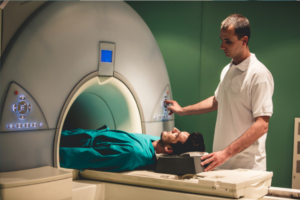 The introduction of Multiparametric Prostate MRI has substantially changed the diagnostic pathway. MRI can identify suspicious lesions that:
- Cannot be felt on DRE.
- May exist despite only mildly elevated PSA levels.
- Can be targeted during biopsy.
As a result, MRI often provides much more detailed information than DRE about the location and extent of suspicious areas. Today, many urologists order a multiparametric prostate MRI before recommending a biopsy.
Multiparametric Prostate MRI can:
- Identify suspicious lesions.
- Reduce unnecessary biopsies.
- Help target biopsies to abnormal areas.
- Improve detection of clinically significant cancers.
Modern prostate cancer evaluation often combines:
- PSA level
- Digital rectal examination (DRE)
- PSA density
- PSA trend over time
- Family history
- Age and ethnicity
- Prostate MRI
- Sometimes additional biomarkers
Only after considering all these factors is a prostate biopsy recommended
- An Important Investigation by The New England Journal of Medicine
In fact, in a very large study published in the New England Journal of Medicine, 26,000 men underwent MRI as the first step in a careful evaluation process before biopsy. This is a summary of the conclusions.
“Prostate cancer presents a tricky screening challenge. Catching it early could mean dodging a painful journey with advanced cancer. Yet a sizable majority of prostate cancers are “indolent” — slow-growing tumors that most likely would never metastasize during the patient’s lifetime, and whose treatment would do more harm than good.
Experts have long clashed over these considerations, with some arguing that the harms of PSA testing outstrip the benefits and others adamant that screening saves lives. The balance may now be shifting as researchers and physicians find ways to reduce the harm of screening, particularly with MRI. A new study published in the New England Journal of Medicine in October 2024 showed that using MRI scans can reduce unnecessary diagnosis and treatment of screen-detected prostate cancer by more than half.
 That result should prompt experts to rethink prostate cancer screening guidelines with MRI in mind, according to Jonas Hugosson, a professor of urology at the University of Gothenburg in Sweden and the study’s lead author. “In my opinion, this is the final piece of the puzzle, providing real evidence that the benefits of prostate screening exceed the harms at the population level,” he said. “This paper is the message to healthcare authorities around the world to review recommendations for men.”
- Biomarkers: The ExoDx Prostate Intelli Score (EPI)
This test was officially launched in 2016, but did not become available until clinical permits were obtained in 2019. It was initially used in New York State. It is a non-invasive urine exosome test that assesses the risk of high-grade prostate cancer before a biopsy.
This relatively new urine-based biomarker test is designed to help determine whether a man with an elevated PSA is likely to have clinically significant prostate cancer (typically defined as cancer with a Gleason Grade Group ≥2) and, therefore, whether a biopsy is more likely to be worthwhile.
Unlike PSA, which measures a protein produced by the prostate, ExoDx analyzes RNA biomarkers contained in tiny extracellular vesicles (exosomes) shed into urine. It looks at the expression of specific genes associated with prostate cancer.
One practical advantage is that the urine sample is collected without requiring a prior prostate massage or DRE.
The test is intended for men who:
- Are considering an initial prostate biopsy.
- Have a PSA in the "gray zone" (roughly 2–10 ng/mL).
- Have not yet been diagnosed with prostate cancer.
Its purpose is not to diagnose cancer directly, but to help estimate the risk that a biopsy would find a clinically significant cancer. So, if your PSA is between 2 and 10 ng/mL and you are uneasy about having a biopsy, you should ask your urologist about this test.
For completeness, you should also be aware of three other tests used for the same purpose as Exodx. These other biomarkers are called 4Kscore, PHI, and SelectMDx. They help determine whether a man with an elevated PSA is likely to have clinically significant prostate cancer and whether a biopsy is warranted. They intend to address the limitations of PSA alone.
4Kscore: The 4Kscore Test is a blood test that measures four prostate-related proteins (including total PSA and free PSA) and combines these measurements with clinical information such as age and DRE findings.
It is used when it is felt useful to:
- Estimate the risk of finding aggressive prostate cancer on biopsy.
- Help avoid unnecessary biopsies.
- Particularly useful when PSA is elevated but the decision to biopsy is uncertain.
PHI (Prostate Health Index). This is a blood test that combines total PSA, free PSA, and a PSA subtype called p2PSA into a single score. It is used when there is a need for:
- A more specific test than PSA alone.
- To help distinguish benign prostate enlargement from cancer.
- It is simple and widely available.
SelectMDx: This is a urine test that measures the expression of genes associated with aggressive prostate cancer, usually after a prostate massage/DRE. Why it might be used:
- Estimates the likelihood of clinically significant cancer.
- Can help determine whether MRI or biopsy is needed.
- Particularly useful when trying to avoid unnecessary invasive testing.
How do these tests compare?
| Test | Sample | Main Goal |
| 4Kscore | Blood | Predict risk of aggressive cancer |
| PHI | Blood | Improve specificity beyond PSA |
| SelectMDx | Urine | Predict the likelihood of a significant cancer |
| ExoDx | Urine | Predict the likelihood of significant cancer without DRE |
- Biopsy
 A prostate biopsy is the only way to diagnose prostate cancer definitively. PSA, DRE, MRI, ExoDx, 4Kscore, PHI, and SelectMDx can only estimate the likelihood of cancer. A biopsy provides actual tissue samples that a pathologist examines under a microscope. The biopsy answers several critical questions:
- Is cancer present or not?
- How aggressive is it? (determined by the Gleason score/Grade Group)
- How much cancer is present?
- Where in the prostate is it located?
This information is essential for deciding whether a man needs:
- Active surveillance (monitoring only),
- Surgery,
- Radiation therapy,
- Or another treatment approach.
This will be the subject of the next article, which will investigate the treatment options.
Today, biopsies are often guided by Multiparametric Prostate MRI to improve the detection of clinically significant cancers and reduce the chance of finding small, low-risk cancers that may never cause problems.
Bottom Line
The PSA test is valuable for identifying men who may be at increased risk of prostate cancer. Still, by itself, it is not highly reliable for determining whether cancer is actually present. A high PSA does not mean cancer, and a normal PSA does not completely rule it out. Its greatest value comes when interpreted alongside clinical findings, PSA trends, and modern imaging such as prostate MRI.
 The extensive investigation by the New England Journal of Medicine clearly indicates that the use of biopsies and their occasional side effects (localized pain, minor bleeding, and temporary urinary changes) can be significantly reduced by using MRI to determine the presence or absence of cancer cells.
The recent availability of the ExoDx urine test can help clarify for those with a PSA between 2 and 10 ng/mL whether a biopsy is needed as the defining test for Prostate Cancer.
After all other diagnostic tests have been done, a biopsy is the gold standard for diagnosing prostate cancer and determining its aggressiveness.
References
- Results after Four Years of Screening for Prostate Cancer with PSA and MRI, New England Journal of Medicine. Sept 2025. https://www.nejm.org/doi/full/10.1056/NEJMoa2406050
- Can MRIs ensure prostate cancer screening does more good than harm? By Angus Chen Sept. 25, 2024 https://www.statnews.com/2024/09/25/can-mris-ensure-prostate-cancer-screening-does-more-good-than-harm/
Related Articles by Engage Estero


Written by
Published June 11, 2026 by Engage Estero
Be Informed,
Get Engaged,
and Make an Impact!

At Engage Estero, we believe in the power of community. As a nonpartisan, nonpolitical, nonprofit, we conduct evidence-based research to provide unbiased information about local issues, helping you improve your quality of life.