

Introduction
Hurricane season is approaching, and many Florida homeowners don’t realize that flood insurance through FEMA’s National Flood Insurance Program (NFIP) typically takes 30 days to take effect. If a storm is already approaching, it’s too late to start coverage!
Flooding doesn’t just happen in “flood zones.” According to FEMA, 1 in 5 flood claims comes from properties outside high-risk areas, and just one inch of water can cause up to $25,000 in damage. Even more surprising, most homeowners’ insurance policies do not cover flood damage. In Florida, flooding can occur very quickly. Storm surge, heavy rain, and overwhelmed drainage systems can cause significant damage even in neighborhoods that have never flooded before.
Flood Zones, Evacuation Zones & Storm Surge Areas
These three designations are not the same — they measure different risks that may occur at different times and are used for different purposes. A home may be outside an evacuation zone but still be in a high-risk flood zone due to nearby ponds or streams. To fully understand your flood risk, check all three maps.
Flood Zones
Indicate your property’s risk of flooding from rainfall, streams, or other water sources.
Evacuation Zones
Identify areas that may need to be evacuated due to storm surge during a tropical storm or hurricane.
Storm Surge Zones
Show where coastal flooding may occur when strong winds push water toward shore.
FEMA Flood Insurance Rate Maps
The Federal Emergency Management Agency (FEMA) produces Flood Insurance Rate Maps (FIRMs) that show areas of high, moderate, and low flood risk. These maps are used to determine building requirements and flood insurance rates.
- High-Risk Areas (Zones A or V): 1% or greater chance of flooding each year (the “100-year flood”).
- Moderate-Risk Areas (Zone X – shaded): Between the 100-year and 500-year flood levels.
- Minimal-Risk Areas (Zone X – unshaded): Higher than the 500-year flood level.
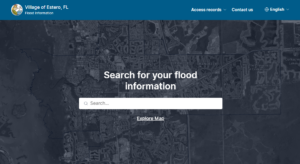
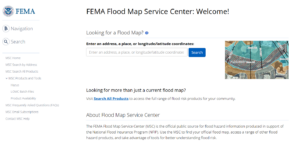
Visit the Village of Estero Flood Map Service or FEMA Flood Map Service Center and enter your mailing address to locate your property and view your flood zone.
Evacuation Zones
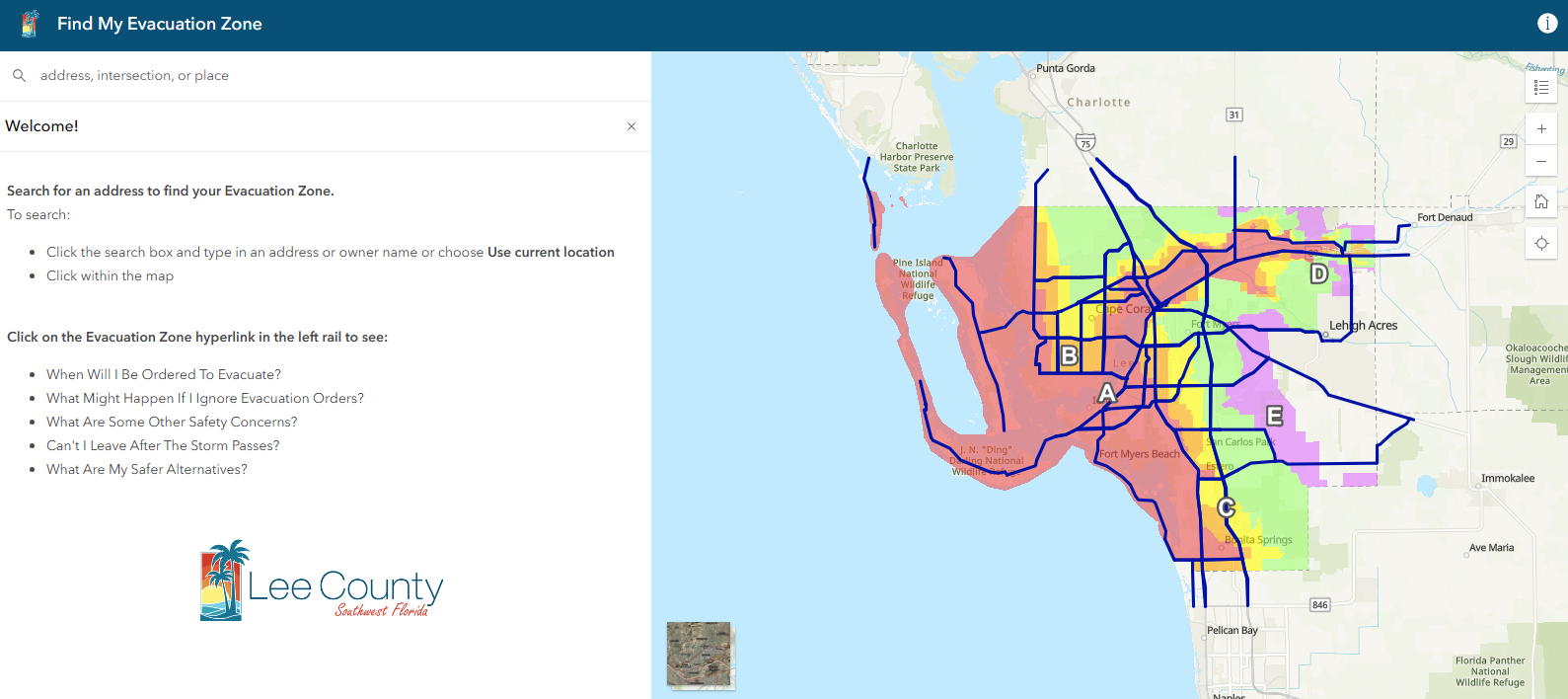
Evacuation zones are based on ground elevation and vulnerability to storm surge.
Zones are labeled A through E, plus non-evacuation zones. If a storm threatens, follow all evacuation orders issued by local emergency officials.
Find your zone using the Lee County Evacuation Zone Map. Evacuation Zone Map
What’s My Flood Risk?
Flooding can happen anywhere due to heavy rain, rising rivers, or storm surge.
Flood zones are used for assessing a property’s flood risk, which heavy rains, tropical storms, or hurricanes can cause. Evacuation zones are based on a property’s vulnerability to storm surge from a hurricane. Everyone lives in a flood zone, which may be high, moderate, or low risk.
The Estero Village provides the following links where you can enter your address to find your elevation above sea level.
Find your flood zone.
Find your evacuation zone.
Even a few inches of water can cause costly damage to your home and belongings.
If you live near a creek, pond, or the coast, consider purchasing flood insurance even if you’re outside a FEMA-designated flood zone.
Key Definitions.
Base Flood: A flood with a 1% chance of occurring in any given year (the “100-year flood”).
Base Flood Elevation (BFE): The height floodwaters are expected to reach during a base flood. New construction should be built at or above the BFE to reduce risk.
Flood Hazard: The potential danger caused by flooding, including water inundation, erosion, or mudslides.
Special Flood Hazard Area (SFHA): High-risk flood zones labeled A or V on FEMA maps. Flood insurance is required for federally backed mortgages in these areas.
Coastal A Zones: Areas just inland of V Zones where waves between 1.5–3 feet are possible during a base flood.
Note: FEMA Base Flood Elevation (BFE) values are accurate to within ±0.5 feet. For precise data, refer to the Lee County Flood Insurance Study.
Related Articles by Engage Estero

To Impact Greater Estero Traffic Problems — Act Now!
To Impact Greater Estero Traffic Problems — Act Now!Jump to: The Process | Report an Issue | What You Can DoIntroduction It will come as no surprise to residents in Greater Estero that the most important issue they want addressed is traffic! In the recent Engage...
Important Update from the East Corkscrew Alliance and Engage Estero
Introduction. February was a busy month, with many meetings among the East Corkscrew Alliance (ECA), Engage Estero, and senior officials at the county and local government levels. Those involved included County Manager Dave Harner, Assistant County Manager Christine...
Be Informed,
Get Engaged,
and Make an Impact!

At Engage Estero, we believe in the power of community. As a nonpartisan, nonpolitical, nonprofit, we conduct evidence-based research to provide unbiased information about local issues, helping you improve your quality of life.