I-75 Expansion Must Not Come at the Expense of Estero’s Quality of Life
Editorial
An appeal for field-verified noise analysis and meaningful community engagement
Estero residents understand why Interstate 75 must be improved. Congestion is worsening, travel times are less reliable, and Southwest Florida needs transportation capacity to support its future. The communities bordering I-75 are not opposing the expansion. They are asking FDOT to recognize a straightforward principle: a project designed to improve mobility doesn't necessarily have to diminish the quality of life in the neighboring communities.
Residents already contend with persistent highway noise. The proposed project would add express and auxiliary lanes along the corridor from Golden Gate Parkway to Alico Road, increasing traffic flow and volume and, in turn, noise for established communities.
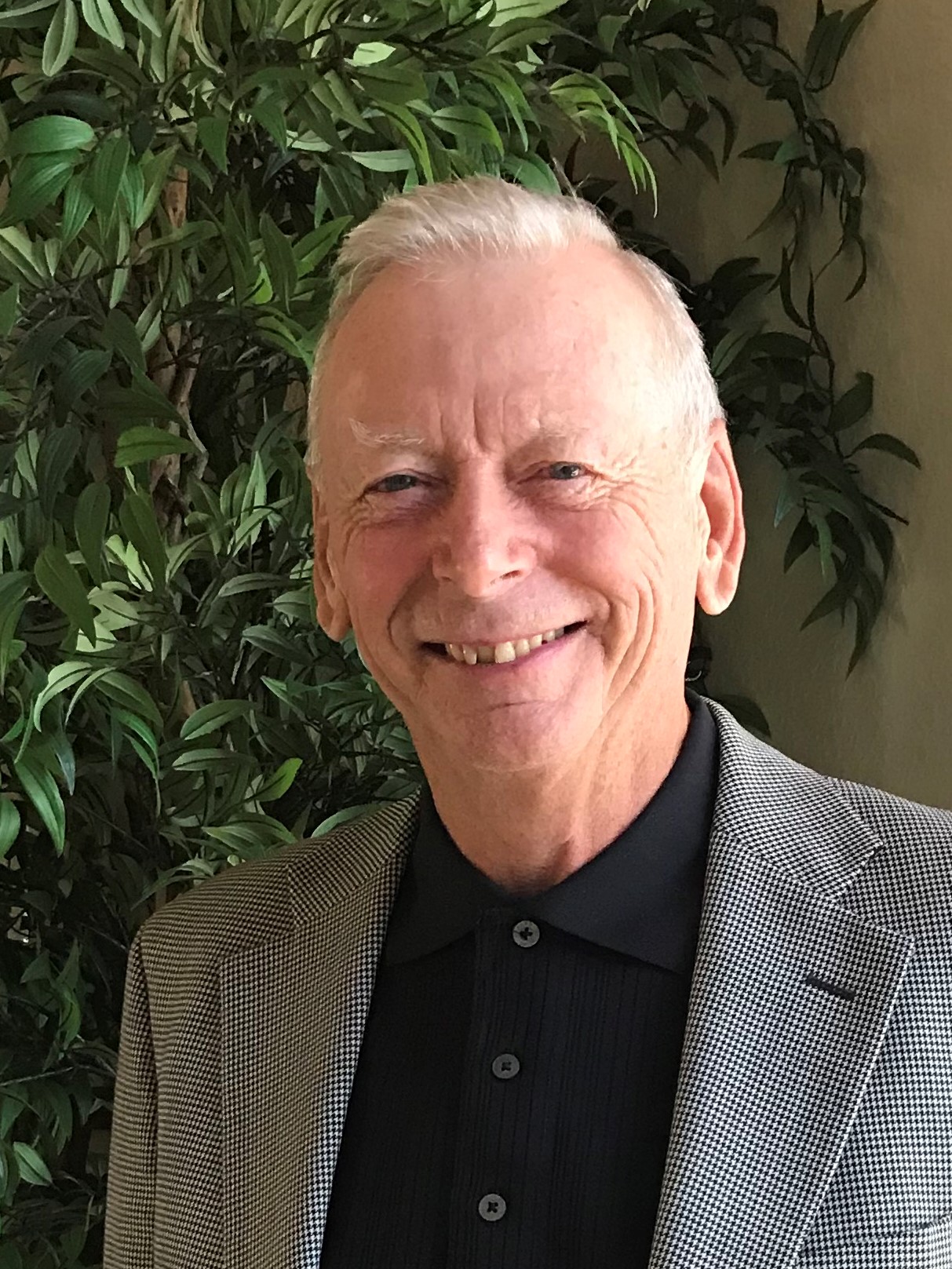
Allan Bowditch
President
Terry Flanagan
Vice President of Administration
 For homeowners in The Brooks, Tidewater, and other neighborhoods along I-75, the question is not whether I-75 will be widened. It is whether reasonable noise protection will be incorporated as the project is refined.
At FDOT’s Estero meeting, residents sought reassurance that their concerns would be taken seriously. According to WGCU, about 200 people attended the meeting, though community reports put the number higher. Residents were informed that, based on modeling of the likely post-construction sound impact, various Estero locations did not meet the applicable criteria for noise barriers. Concerns were expressed after several residents were told by FDOT personnel that, based on their investigation, there were no plans to make the barrier walls continuous along the length of the Brooks Communities.
While it is understood that FDOT must comply with federal and state standards, residents do not accept reliance on modeling. This approach raises many questions about the inputs used and the accuracy of its assessment of day-to-day environmental and traffic changes. Understandably, Estero residents who live beside I-75 want to know whether the inputs and assumptions accurately reflect the day-to-day conditions they experience locally.
 Key Questions Raised by the Estero Community
-
Measurement Scope: Were sufficient physical measurements taken within the affected neighborhoods?
-
Environmental Variables: How were earth berms, existing privacy walls, retention lakes, elevation differences, overpasses, and reflected sound factored into the calculations?
-
Real-World Validation: Were computer model results validated against actual, real-world sound readings at the homes that will be directly affected?
-
Inconsistent Recommendations: Why do apparently similar locations along the corridor receive fundamentally different mitigation recommendations?
-
Regional Disparities: Why do project maps appear to offer more extensive protection in certain Collier County locations compared to equivalent Lee County settings in Estero?
Because communities had so little time to explain to residents not only the meeting date in Estero but also that the road widening would extend north from Coconut Road to just below Alico Road, communities north of Corkscrew Road remained relatively unprepared. This did not align with FDOT’s policy of keeping residents properly informed when new developments are contemplated.
One resident reported being told that the noise analysis would be finalized shortly after the meeting. But many of those present appeared to believe that FDOT had already decided on its noise mitigation decisions, or the lack thereof! This was clearly an upsetting prospect.
Public engagement should be more than comment cards at a crowded, open-house-style meeting. A complex issue requires a transparent exchange where:
- FDOT explains its data and assumptions in its assessment;
- Residents identify conditions the analysis may have overlooked;
- Engineers verify those concerns in the field;
- The agency shows how any new variable might or might not influence the final result.
This process is not a demand to change the approach taken, but a request to ensure that all potential variables residents experience are considered to reach an accurate conclusion.
Health, Property Values, and Quality of Life
Intrusive traffic noise alters the experience of sitting on a lanai, walking through a neighborhood, sleeping with a window open, or enjoying an outdoor amenity. It harms people’s health and adversely affects property values.
A local Realtor told WGCU that road noise was already affecting interest in homes near I-75, illustrating why homeowners worry about property values and their well-being. High levels of road traffic noise have been linked to a higher incidence of cardiovascular disease, sleep disturbances, chronic stress, and hearing difficulties.
Many Estero communities, especially those in The Brooks, representing thousands of residents, have requested a continuous 22-foot noise-abatement wall along their I-75 boundary. The Village of Estero, the Lee County Metropolitan Planning Organization, state officials, and Engage Estero have supported this request. Tidewater residents have separately asked FDOT to visit their community and take actual readings, particularly near the Estero Parkway overpass. These are requests that warrant a detailed and considered response.
FDOT now has an opportunity to turn conflict into collaboration. Before final noise decisions are locked in, the agency should meet directly with affected communities; disclose the relevant model assumptions, receptor locations, predicted levels, and feasibility calculations; conduct field measurements at representative neighborhood locations and times; reconcile apparent inconsistencies across comparable sites; and explain in writing how resident evidence changed, or did not change, the final recommendations. It should also evaluate the effectiveness of continuous barriers versus those with short wall sections that leave gaps in protection.
Engage Estero is not asking FDOT to choose between appeasing neighborhoods and transportation needs. It is asking the agency to consider expanding I-75 in partnership with the communities it serves, rather than merely alongside them. Taking into account the impact on health, property values, and the QoL issues residents have a right to expect, expansion and reasonable, sound mitigation are not competing goals. With credible metrics, transparent analysis, and genuine engagement, both can be part of the same successful project.
Before the plans become irreversible, we ask that FDOT meet with Estero’s affected communities, verify the noise conditions in the areas where residents live, and work with them to find a solution that protects mobility, quality of life, and property values for all?
Source note: Prepared from FDOT project materials, WGCU reporting dated August 31, 2026, community correspondence, presentations, public comments, and interviews conducted September 2, 2026.
Related Articles
Dangerous U-Turns by Large Commercial Trucks on Corkscrew Road in Estero
October 17, 2026

Village of Estero Supports Resident Concerns Over I-75 Expansion Impacts
September 15, 2026

I-75 Widening: Is the Florida Department of Transportation Underestimating the Long-Term Noise Impact?
September 10, 2026

Be Informed,
Get Engaged,
and Make an Impact!

At Engage Estero, we believe in the power of community. As a nonpartisan, nonpolitical, nonprofit, we conduct evidence-based research to provide unbiased information about local issues, helping you improve your quality of life.