

Are You Prepared for the 2026 Hurricane Season?
Introduction
A new hurricane season brings a familiar question: Are you ready if chaos crosses your path? While no two storm seasons are the same, your priority remains unchanged - to protect what matters most.
Although the forecast for the 2026 hurricane season suggests it will be below normal, with about two major storms of Category 3 or higher, it only takes one storm in our vicinity to make it an active season here! Recent history is a reminder of the devastation hurricanes can cause, even far beyond the shoreline.
Hurricanes don’t have to make landfall where you live to disrupt your routine - or your life. The highest-frequency hurricane areas include coastal North Carolina, South Florida, and Southeast Louisiana, with about one every five to seven years.
Before Mother Nature throws her worst at us, if you have a generator, it’s best to ensure it is serviced and ready to power your home.
The cost of a power outage can mount up!
- Lodging costs per night $110
- Restock refrigerator $250
- Flooded basement or ground floor $26,807
The best time to prepare for a storm is well before it happens. Stay ahead of any weather event with the supplies and information you need to keep you and yours ready for anything.
Start Now
If You Stay
Identify the safest location in your home to wait out a storm and review emergency plans for evacuation and local authority recommendations.
If You Leave
Identify your nearest evacuation centers. As an alternative, create a list of options with friends outside of the forecasted storm area.
Stay Informed
Create a communication plan, designate primary and backup meeting places, and gather maps in case mobile service is down.
Some useful tips
Photograph your expensive possessions.
Check your Carbon Monoxide and smoke alarms are fully functional.
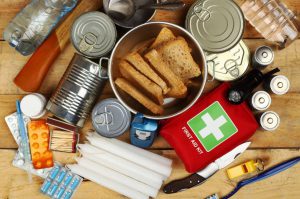
Ensure you have an emergency medical kit, and things like flashlights, a radio that does not require electrical power, food items that do not require refrigeration, and water.
- Make sure you have any pharmaceutical or other medical products you take with around a month's supply.
Remember, food in your refrigerator is only safe to eat for about 4 hours without electricity. Beyond that, the recommendation is to discard meat, poultry, fish, eggs, and leftovers.
- A full freezer will hold a safe temperature for 48 hours (24 hours if half full). These times are only true if the appliance door remains closed.
Help keep children as calm as possible before, during, and after a hurricane with a little guidance and reassurance to ease fears and stress.
- Talk about your safety or evacuation plans before a storm arrives.
- Let them help gather supplies and feel part of the process. Keep in constant communication during a storm or hurricane. Talk through what you’re experiencing and share your plans for what happens after the storm.
- Pack water, snacks, and first aid items, including bandages and antibiotic ointment. Include toys, games, and other comfort itemsthat don’t require power.
If you live in an apartment or condominium
Consider Portable Power Stations: they produce zero emissions, are safe for indoor use, and the GB2000 can power a 120W refrigerator for up to 24 hours.
Pet safety
When preparing for a hurricane, keep your four-legged family members in mind as well. The ASPCA estimates that one-third of cat and dog owners don’t have a pet disaster plan, leading to last-minute stress during evacuations.
While Lee County shelters accept pets, not all hotels or out of county shelters do. And those that do require you bring all your own supplies. If you decide to stay home, continue to monitor any evacuation notices. Emergency kits for pets should include:
- 7 days of food and water (with a can opener, if needed).
- Medication for one week.
- Pet carrier/kennel.
- Extra leash.
- Photo of you and your pet together to prove ownership.
- Pet ID tags, rabies vaccination tag, and collar.
- Medical or vaccination records to share with a pet-friendly shelter.
Additional suggestions:
- Getting your pet microchipped (talk to your vet).
- Placing a rescue alert sticker on your door if you shelter in place, letting responders know there’s a pet inside.
- Write “EVACUATED” on any alert sticker if you choose to leave.
- Slowly reintroduce your pet(s) to a disheveled home if you evacuated to reduce stress and unknown dangers.

If you have an aquarium: To maintain the delicate balance in an aquarium, you must keep your filtration system and heater running 24/7. Whether the outage lasts a few hours or a few days, here are several steps you can take to minimize damage:
- Unplug your filter and rinse it before restarting.
- Maintain stable water temperature by covering the tank with a blanket.
- Make up for lost oxygen with a battery-powered air pump.
- Have a Generac generator to keep the power on.
Before the storm
- Turn your refrigerator and freezer to the coldest setting.
- Fill bathtubs and large containers with water for sanitation purposes.
- Turn off and properly secure outdoor grill propane tanks.
- Unplug small appliances in the rooms you do not plan to use during a storm.
- Charge cell phones.
- Check the yard and landscaping for any trees that should be trimmed, clear gutters, and bring in outside items if high winds can pick them up.
- Fill gas cans in the event of an evacuation or to run a portable generator.
- Use hurricane shutters or board up windows and doors with 5/8-inch plywood.
- Reinforce garage doors using a door bracing kit.
Should you stay or should you go?
Prepare to depart if you live in a manufactured or mobile home, or if your home was built before the current hurricane building standards.
Leave if your home is vulnerable to a storm surge or flooding.
If an evacuation has been issued, leave immediately.
When evacuating
- Know where you’re going. Plan primary and alternative routes.
- Create an evacuation destination with a backup location in mind.
- Listen to orders at least twice to determine driving directions.
- Grab your emergency kit in anticipation of long power outages.
- Bring backup maps/directions in the event mobile services aren’t available.
- Unplug appliances, turn off water at the main valve, and deactivate electricity at the breaker box.
- Pack your vehicle and go to your designated evacuation spot or backup location.
- Turn on the radio to stay tuned to emergency bulletins.
- Stick to evacuation routes.
When sheltering in place
- Cover all windows with permanent storm shutters or 5/8-inch exterior-grade marine plywood.
- Take refuge in a small, interior room or closet at the lowest level of your home. Avoid windows and glass doors.
- Stay tuned to updates and have a battery-powered emergency radio on hand.
- Save phone battery as much as possible.
- Unplug all devices from outlets during outages to reduce power surge damage.
- If flooding nears the home, turn off all electricity.
- Evacuate immediately if given the order OR if the home is damaged.
Never operate a generator indoors, including a garage, even with windows open. Carbon monoxide gas is odorless and colorless and can be deadly within minutes.
After the storm
Do not return before local authorities recommend doing so
- Whether sheltered in place or returning, stay alert for potential damage and dangers, including post-storm rain that can produce flooding.
- If your home is seriously damaged, leave immediately and report it to local authorities.
- If you suspect a gas leak, leave immediately and report it to local authorities.
- Check on neighbors.
- Report downed power lines to the utility company and local police/fire departments.
- Take photos of your home, yard, and street.
- Contact your insurance.
- Do not drive on closed roads - avoid flash-flooding or downed power lines.
- Consider hiring contractors to clean up large debris to avoid personal injury.
- Keep receipts for reimbursement through insurance or government programs.
- If power is out, unplug all major appliances before turning the electricity back on to minimize surge damage.
- If your home floods, have a professional electrician check the residence before turning electricity on.
- Save all phone calls for emergencies. Phone systems are often down or busy after a disaster. Use text messages or social media to communicate with family and friends.
In case of extended power outages
- Have alternate plans for refrigerating medicines or using power-dependent medical devices.
- Keep freezers and refrigerators closed.
- Only use portable generators outdoors and far away from windows, doors, and vents.
- Disconnect appliances and electronics to avoid potential surge damage.
There is an excellent article on what to do if a hurricane threatens. If you keep this article for reference, you can consult the following link if a hurricane is imminent. https://www.iii.org/abrticle/what-to-do-when-a-hurricane-threatens
Stay Informed
In Estero, several options exist to keep abreast of the latest storm information, evacuation plans, and available resources. Here are a few:
- Sign up for alerts through the Lee County alertLee program, which will give you access to County-wide and Estero-specific updates. http://alertlee.com/
- Follow the Village’s dedicated Hurricane Preparation page (storm-specific pages will also be created). https://estero-fl.gov/emergency-management-flooding-hurricane-preparedness-evacuation/
- Subscribe to the Village’s email updates program. https://estero-fl.gov/subscribe-via-e-mail/
- Follow Lee County Emergency Management using the Lee Prepares App for notifications during emergencies. iPhone | Android
- Create an emergency business response and continuity plan. In a hurricane, this will help your business recover quickly.
ENGAGE ESTERO is committed to ensuring everyone's safety in the greater Estero area. The time to prepare for hurricane season is now. Equip yourself with the knowledge and resources to protect yourself, your loved ones, and your belongings when the storm arrives!
Reference:
How to Prepare for Hurricane Season. The Insurance Information Institute. https://www.iii.org/article/preparing-hurricane
Related Articles by Engage Estero
Written by

Allan Bowditch
President
Published May 12, 2026 by Engage Estero
Be Informed,
Get Engaged,
and Make an Impact!

At Engage Estero, we believe in the power of community. As a nonpartisan, nonpolitical, nonprofit, we conduct evidence-based research to provide unbiased information about local issues, helping you improve your quality of life.